Showing posts with label anti-oedipus. Show all posts

25 May 2026

Table Talk: Notes on the Schizo-Table

Nevena EkimovaSchizophrenic Table (A Model) (2020)
Photo by Rosina Pencheva (ed.) [1]

'The schizo-table desires nothing but to continue its own production forever ...' 
 
 
I. 
 
Some readers might recall that I discussed Not Vital's Self-Portrait as a Table (2025) in a post published last month: click here
 
Well, six weeks after first encountering this work, it continues to invite further reflection on the role played by tables in art; both as visual symbol and material object.
 
I love the way that a piece of everyday furniture designed for human use can be deterritorialised from its functionality and everyday context; can seduce the viewer and enter into a becoming with them.    
 
 
II. 
 
Of course, I'm not the first or only one to be fascinated by tables in art. 
 
Agnese Skabe, for instance, has written a short essay exploring how various artists have depicted tables on canvas and what their meanings are (be they political, spiritual, or psychological in nature).
 
It's an informative piece, although some of her sentences contain ideas and phrases that I find troublesome. For example: "The table serves as a significant element that reveals the relationships and values that shape the essence of human life" [2].
 
Relying as it does on foundational assumptions about fixed significance and human essence is philosophically problematic in and of itself, but the sentence also denies the autonomy of the table as object; it exists only in servitude and is defined by what it reveals about us rather than its own being [3]. 
 
Thus, whilst Skabe's work on the role of mundane and sacred objects in traditional and modern painting is fairly comprehensive, for me, the table only really becomes interesting when it is conceived as more than merely a site of shared human experience and human interaction; when it has something a little schizo about it ... 
 
 
III. 

Despite being born in Belgium, Henri Michaux was a quintessentially French avant-garde poet, writer and painter. 
 
A pioneer of psychedelic art produced under the influence of mescaline and LSD, his radical approach to language and the mind earned him praise from some of the leading literary figures of his era; from Gide to Ginsberg, and Borges to Burroughs. 
 
Michaux also maintained close friendships with several philosophers, particularly Emil Cioran, and inspired numerous visual artists, including our very own Francis Bacon.    
 
In 1965, a jury of his peers awarded him the prestigious Grand prix national des Lettres. True to his uncompromising principles, however, Michaux refused to accept the award, preferring to remain a pure outsider - a gesture that only amplified his legendary status among fellow artists. 
 
But what has this got to do with tables? 
 
Well, in 1966 he published Les Grandes Épreuves de l'esprit et les innombrables petites - a book translated into English by Richard Howard as The Major Ordeals of the Mind and the Countless Minor Ones (1974) - in which the following astonishing description of what he called a schizophrenic table appears:
 
"Once noticed, it continued to occupy one's mind. It even persisted, as it were, in going about its own business. . . . The striking thing was that it was neither simple nor really complex ... or constructed according to a complicated plan. Instead, it had been desimplified in the course of its carpentering. . .. As it stood, it was a table of additions, much like certain schizophrenic's drawings, described as 'overstuffed,' and if finished it was only in so far as there was no way of adding anything more to it, the table having become more and more of an accumulation, less and less a table. . . . It was not intended for any specific purpose, for anything one expects of a table. Heavy, cumbersome, it was virtually immovable. One didn't know how to handle it (mentally or physically). Its top surface, the useful part of the table, having been gradually reduced, was disappearing, with so little relation to the clumsy framework that the thing did not strike one as a table, but as some freak piece of furniture, an unfamiliar instrument . . . for which there was no purpose. A dehumanized table, nothing cozy about it, nothing 'middle-class,' nothing rustic, nothing countrified, not a kitchen table or a work table. A table which lent itself to no function, self-protective, denying itself to service and communication alike. There was something stunned about it, something petrified. Perhaps it suggested a stalled engine." [4]  
 
 
IV. 
 
What on earth are we to make of this? 
 
Fortunately, Deleuze and Guattari are on hand to help us out ... 
 
Quoting the above passage early in L'anti-Œdipe (1972), they point out that the table is schizophrenic because it keeps adding elements to itself until it ceases to function as a table altogether, thereby rejecting its usefulness (and servitude) to the human being and producing its own non-commodifiable reality. 
 
These extra elements - at least if Not Vital is to be believed - include ears and, who knows, perhaps other dis-organ-ised (or indeterminate) organs will one day sprout; if a table has legs, why shouldn't it have arms; if a table has ears, why shouldn't it also have eyes all over, just like the cherubim of whom Ezekiel speaks [5]?  
 
The schizo-table isn't an object of furniture that one might find flat-packed in IKEA; it's what Deleuze and Guattari call a desiring-machine - full of the restless, active, connective energy of desire and happily going about its business, even if continually breaking down; for desiring-machines "work only when they break down" [6].  
 
 
Notes
 
[1] Nevena Ekimova is a Bulgarian artist, currently based in her hometown of Gabrovo. Rosina Pencheva is a photographer and producer of cultural projects, based in Sofia, though originally also from Gabrovo.
 
[2] Agnese Skabe, 'The Table in Art: Symbolism and Interpretations', published - somewhat suspiciously - in the Journal of Environmental Science and Agricultural Research, Vol. 4, Issue 1 (OASK Publishers, 2026), pp. 1-4. 
      I am not providing a link as I suspect this is not a peer-reviewed academic journal, but is, in fact, a predatory publication (i.e., one which, whilst granting readers open access, prints just about anything providing the author pays a fee) and I don't want to have Blogger remove the entire post on the grounds that I have (inadvertently) violated their community guidelines.    
 
[3] For Skabe, when an artist paints a table - or, presumably, any other object - they are essentially telling us something about themselves or offering an interpretation of human life in general. In a paragraph I find particularly objectionable, full as it is of anthropocentric conceit, she writes: 
      "Philosophically speaking, the table becomes a symbolic space where the person encounters their own existence [...] and derives meaning from being. The Table's presence in art reveals our inner world [...] It is a metaphor for the order of our lives, our efforts to create structure and meaning in the world. Just as philosophy seeks to understand the essence of humanity and the structure of the world, so too does art, through the symbol of the table, offer a deeper perspective on human existence." 
 
[4] Henri Michaux, The Major Ordeals of the Mind and the Countless Minor Ones, trans. Richard Howard (1974), pp. 125-127. 
      Quoted by Deleuze and Guattari in Anti-Oedipus, trans. Robert Hurley, Mark Seem, and Helen R. Lane (The Athlone Press, 1984), pp. 6-7.
 
[5] See Ezekiel 10:12 where we are told that the cherubim - God's celestial guardians - are covered in eyes, including their backs, their hands, and their wings.  
 
[6] Gilles Deleuze and Félix Guattari, Anti-Oedipus ... p. 8.  


22 May 2026

A Thing of Beauty in the Abstract: on the Sexiness of the Periodic Table (A Post for Ian Buxton)

Blair Bradshaw: Periodic Table (2013) 
Oil on canvas (30" x 72") [1]
 
 
I. 
 
In a recent 6/20 paper on paraphilia [2], I claimed that desire needn't be constrained and shaped purely by our own human experience and capacity and that once desire is liberated, then we are free to love anything and everything and not just anyone - including animals, plants, and atypical objects of every description. 
 
This is not, however, to posit a model of pansexualism: I'm not saying all is sex [3]. What I am suggesting, rather, is that an element of libidinal energy is invested in everything we do and that desire is what brings things "which otherwise are incommensurable" [4] into touch. 
 
In other words, desire - which has no fixed essence and therefore evades definition - can best be thought of in terms of how it functions as a "strange current of interchange" [5] flowing between bodies (including abstract, virtual, or artificial bodies). 
 
As Deleuze and Guattari argue, if you examine the social field closely enough, you'll find that beneath the conscious investments of economic, political, and religious formations, "there are unconscious sexual investments, microinvestments that attest to the way in which desire is present" [6]          
 
Thus, sexuality exists even in the way that a bureaucrat fondles his records [7] - or, we might add, in the strange manner that the periodic table exerts its allure upon a scientist.
 
 
II.
 
The periodic table is an ordered arrangement of chemical elements into rows and columns based on their assigned atomic number [8]. It's both a marvellous product of the scientific imagination and an iconic piece of graphic design [9].  
 
Of course, I'm aware that one must exercise a certain degree of caution here; that the periodic table is first and foremost a visual record of scientific knowledge rather than a work of the artistic imagination. Russian chemist Dmitri Mendeleev was almost certainly more concerned with physics than aesthetics when he produced the first periodic table in 1869 [10] and, ultimately, it's determined by function rather than form.
      
Nevertheless, it relies heavily on certain design principles to do with layout and colour in order to translate highly complex scientific laws into a pleasing and accessible format and anyone who cannot see the elemental beauty in it must be blind. 
 
And beauty, of course, isn't tied to truth or goodness, so much as to sex appeal. Thus, we can say that not only is its vertical and horizontal cross-referencing lovely to look at, it also communicates a sense of joy and warmth. My critics at the 6/20 may not like to admit the fact, but for certain men a body of knowledge is more seductive, and more arousing, than that of even the most comely young wench.  
 
 
III.
 
To understand this allure, one might look past the design aesthetic and consider the libidinally material behaviour of the elements themselves. For the periodic table is perhaps best thought of as a map of highly eroticised intensities. 
 
Take, for instance, the alkali metals sodium (Na), potassium (K), and caesium (Cs). Hyper-reactive and volatile, these elements are driven by a desperate, unstable promiscuity. They cannot bear to exist in isolation and will explosively couple with almost any partner in a flash of consummating heat.
 
At the opposite end of this behavioural spectrum lie the noble gases helium (He), neon (Ne), and argon (Ar). Embodying a mixture of coldness, cruelty and self-contained celibacy, they refuse to bond or even flirt with the rest of the chemical universe. Theirs is an erotics of absolute refusal and pristine isolation - until that is a sudden, intense electrical current causes them to glow with the ecstasy of one who has been ravished.   
 
Between these extremes lie tactile and toxic temptations such as quicksilver (Hg) - a queer, elusive liquid metal that defies the standard boundaries of its state. 
 
But of course, for me - as a writer and homotextual - the seduction of the periodic table lies more in the wonderfully evocative and allusive names of the elements that roll off the tongue with almost liturgical sensuality: from the dark gothic beauty of cobalt (Co) [11]; to the celestial beauty of selenium (Se) [12]. 
 
If, as Einstein once suggested, the mathematical formulations of science are the poetry of logical ideas, then to read the periodic table aloud is to recite a chant of desire; a poetic incantation where language itself becomes a site of bliss. 
 
So, when 6/20 regular Ian Buxton asks if the periodic table is sexy, the answer is obviously - and resoundingly - Yes! [13]  
  
 
Notes
 
[1] Blair Bradshaw is a contemporary American artist known for his visually striking paintings of the periodic table of the elements. His work blends the scientific data with an aesthetic interpretation of human experience, thereby giving familiar elements whole new meaning (often of a whimsical character). Physically large in size, his pieces are created using diverse mediums, including oil on canvas, oil on paper, and wood. 
      For a discussion of Bradshaw's work, see the adapted extract from Tami I. Spector's article 'The Art of the Periodic Table', posted on The MIT website (4 Feb 2021): click here. The full piece can be found in Leonardo, Vol. 52, Issue 3 (June 2019). 
      In brief, Spector argues that the intersection of art and science has the potential to build new insights, ideas, and processes beneficial to both disciplines. She also makes the interesting observation that Bradshaw "elevates the iconography of the periodic table, using its form to create visual-linguistic connections and rearranging and isolating the elements into clever wordplay". In other words, for Bradshaw, it's the cultural associations and linguistic connotations that most excite about the periodic table.
 
[2] See the Events page on Torpedo the Ark for details of the paper: click here
      The 6/20 Club is a twice-monthly salon graciously hosted by Christian Michel at his west London home. Established for over twenty years, it has seen an impressive assortment of speakers present papers on a huge number of topics.  
 
[3] D. H. Lawrence, '...... Love Was Once a Little Boy', in Reflections on the Death of a Porcupine and Other Essays, ed. Michael Herbert (Cambridge University Press, 1988), p. 339.
 
[4] The politics of desire is far more subtle and further reaching than a naive form of pansexualism. Lawrence was always insistent on this point. Thus, even if an element of sex enters every aspect of human life, this does not mean everything can or should be reduced to sex. Greater even than the sex impulse is the creative impulse; it is the latter - not the will to love - that is the world-forming drive. 
      See chapter IX of his Fantasia of the Unconscious, ed. Bruce Steele (CUP, 2004). And see chapter 11 of my Outside the Gate (Blind Cupid press, 2010), where I discuss this.    
 
[5] D. H. Lawrence, 'Dana's Two Years Before the Mast', in Studies in Classic American Literature, ed. Ezra Greenspan, Lindeth Vasey, and John Worthen (Cambridge University Press, 2003), p. 109.
 
[6] Gilles Deleuze and Félix Guattari, Anti-Oedipus, trans. Robert Hurley, Mark Seem, and Helen R. Lane (The Athlone Press, 1994), p. 183. 
 
[7] See Deleuze and Guattari writing in Anti-Oedipus ... p. 293. The passage reads: "The truth is sexuality is everywhere: the way a bureaucrat fondles his records, a judge administers justice, a business man causes money to circulate ..." D&G are also keen to emphasise that this is not merely a metaphor. 
 
[8] Elements are organised in horizontal rows - known as periods - by their increasing atomic numbers. The vertical columns - or groups - represent elements with similar electronic structures and properties.  
 
[9] For an interesting short piece discussing the periodic table by graphic designer and visual communications expert Tony Pritchard, see Eye, Vol. 20, Issue 78 (Winter, 2010), please click here.  
 
[10] It might be noted that Mendeleev did not actually know about atomic numbers in 1869; he organised elements by atomic weight. The physical basis for atomic numbers was discovered by English physicist Henry Moseley in 1913. 
      Before Moseley's work, atomic numbers were simply a placeholder for an element's position on the periodic table. Moseley used X-ray spectroscopy to measure the characteristic wavelengths of various elements, revealing that the square root of an X-ray's frequency is directly proportional to its atomic number. This breakthrough - known as Moseley's Law - allowed him to reorganise the periodic table by atomic number rather than atomic weight, correcting long-standing inconsistencies in Mendeleev's original table. 
 
[11] The word cobalt derives from the German word kobold, the name of evil underground goblins and given to the ore by medieval German miners because the rock was considered not only worthless, but emitted toxic fumes when smelted.   
 
[12] The word selenium is from the Greek word selēnē [σελήνη], meaning moon (though this is not related to its silvery colour when existing in its most stable form). 
 
[13] Ian Buxton mistakenly thought I wasn't being serious when I answered in the affirmative to his question 'Is there anything sexy about the periodic table?' Normally, I would let such a misunderstanding pass. But, just for once, I wanted to let it be known that while I might present my work in a relatively light-hearted manner, I do, as a matter of fact, take the ideas fairly seriously. 
      Similarly, if I choose not to discuss things at length or in depth at the 6/20, that's because I think of it not as an academic space, but as a forum in which speakers are invited to please their audiences by playing with ideas, rather than engage in an aggressive form of dialectics or intellectual sparring.          
 
 
This post is for Christian and Jennifer (my co-presenter on the night) - and with special thanks to Maria, Dawn, Fatima, Ruth, Soko, and Rebecca. 
 
 
SA and Christian Michel at the 6/20 
(20 May 2026)
Photo by Maria Thanassa 
 

26 Dec 2025

Flogging a Dead Reindeer

Image posted to Instagram on 24 Dec 2025 
by $teve Jone$ @jonesysjukebox
 
 
I. 
 
Marx famously predicted that within modern capitalism all values would be reduced not to zero, but resolved into one final, fatal value; i.e., commercial or exchange value. 
 
Thus it is that bourgeois society does not efface old structures and insititutions - including punk rock bands - but subsumes them. Old modes do not die; they get recuperated into the marketplace, take on price tags, become commodities.
 
And so it is we witness three ex-Pistols and a grinning wannabe Johnny Rotten hawking their merchandise via social media even on Christmas eve. This includes a 'God Save the Queen' seasonal jumper which they model in the above photos [1].    
 
 
II. 
 
This shouldn't surprise anyone: Malcolm - in collaboration with Jamie Reid and Julien Temple - warned what would happen in The Great Rock 'n' Roll Swindle (1980) and the grim reality of the fate that awaited the band was made explicit in the album titles Some Product: Carri On Sex Pistols (1979) and Flogging a Dead Horse (1980).  
 
And I have written several posts on this subject; see, for example, the post dated 12 June, 2015 in which I discuss the issuing of a Sex Pistols credit card on Virgin Money (in two designs): click here.  
 
But, even so, I still find it sad and depressing to see the Sex Pistols - now a punk rock brand - selling Never Mind the Bollocks Christmas baubles (at £18 each) [2]
 
And it makes me despise an economic system which, on the one hand, equalises and makes everything the same, whilst, on the other hand, encouraging all modes of conduct and permitting all manner of thinking, providing they are economically viable and turn a nice profit. 
 
I am not a Marxist: but, in as much as capitalism leaves no other nexus between people than naked self-interest and cash payment [3] - and in as much as it infects every sphere of activity (including the arts) with the same greed and vulgarity - I do find myself experiencing (à la Ursula Brangwen) a feeling of "harsh and ugly disillusion" [4]
 
And so, I'm almost tempted this Christmas to invoke that exterminating angel dreamed of by Deleuze and Guattari; the one who will consummate capitalism by fucking the rich up the arse and transmitting "the decoded flows of desire" [5]
 
 
Notes
 
[1] Readers can purchase this synthetic knitted jumper (it's only 8% wool), priced £60, from the Sex Pistols official website store: click here
 
[2] Again, head to the official Sex Pistols website shop: click here
 
[3] I am paraphrasing from memory what Marx and Engels write in The Communist Manifesto (1848).  
 
[4] D. H. Lawrence, The Rainbow, ed. Mark Kinkead-Weekes (Cambridge University Press, 1989), p. 403. 
 
[5] Deleuze and Guattari, Anti-Oedipus, trans. Robert Hurley, Mark Seem, and Helen R. Lane (The Athlone Press, 1994), p. 35.  
 
 
Xmas bonus: Julien Temple's hour-long documentary Christmas with the Sex Pistols (2013), featuring footage from their last UK concert on Christmas Day, 1977: click here. It was first shown on BBC Four on Boxing Day 2013.   


14 Sept 2023

Was D. H. Lawrence a Primitive Communist?

Top: Quetzalcoatl by Hunt Emerson in Dawn of the Unread (Issue 7)
Bottom: Communist red flag with classic hammer and sickle design
 
 
I.

The concept of primitive communism is often credited to Marx and Engels and advances the idea that hunter-gatherer societies were traditionally based on egalitarian social relations and the common ownership of resources, distributed in accordance with individual needs. 
 
It seems that Marx and Engels took the notion from the pioneering anthropologist Lewis H. Morgan - best known for his work on kinship and social structure amongst the native peoples of North America (particularly the Haudenosaunee) - although it might be argued that the idea of primitive communism can also be traced back to Rousseau and his celebration of the noble savage.    
 
Wherever they picked up the idea, it obviously excited the imagination of Marx and Engels and they developed it broadly, applying it, for example, not only to wild hunter-gatherer societies and indigenous peoples, but to barbarian societies formed by the ancient Germanic tribes beyond the borders of the Roman Empire.
 
Marxist scholars and theorists - perhaps embarrassed by the romanticism of all this - attempted to downplay the significance of primitive communism in the work of their idols [1]
 
However, the madmen of the Khmer Rouge, looking to build on the revolutionary fantasies of Marx and Mao, really ran with the idea. Indeed, the party's General Secretary was so impressed with the self-sufficient manner in which the mountain tribes of Cambodia lived that he relocated the urban population to the countryside and forced it to work on collective farms. This resulted in approximately a quarter of Cambodia's population dying from malnutrition and disease, but at least he gave it a go.   
 
Still, never mind Pol Pot - what about D. H. Lawrence? Was he too someone seduced by the fantasy of primitive communism?

 
II. 
 
According to John Pateman, The Plumed Serpent can be read as an allegorical work that isn't so much concerned with ancient Aztec gods as promoting a political vision of a possible future Mexico based upon a model of primitive communism. 
 
For Like Marx, argues Pateman, Lawrence was interested in how human development might involve a radical return to pre-modern social relations. Thus, the hymns which Lawrence writes for his fictional neo-pagan religious movement should be heard as a revolutionary call to action, comparable to The Communist Manifesto (1848).
 
I have to say, I think there are problems with this reading of Lawrence's novel. And, push comes to shove, I'm with the German hotel manager who describes Ramón's Quetzalcoatl movement as another form of national socialism - not primitive communism [2].  
 
However, as I don't have advance access to the paper that Pateman is due to present to the D. H. Lawrence Society next month, I shall refrain from offering any criticisms here and now. Instead, let me just remind readers of my own readings of The Plumed Serpent, which can be found in several posts, including here, here, and here
 
In sum: The Plumed Serpent is - for me at least - Lawrence's rather frantic attempt to create what Deleuze and Guattari would call neo-territorialities based upon old fragments of code and the invention of new forms of jargon and myth [3]
 
Unfortunately, such neo-territorialities are, at best, artificial and archaic and, at worst, fascistic and malignant. As Kate's dead husband once told her: "Evil is lapsing back to old life-modes that have been surpassed in us." [4]  
 
 
Notes
 
[1] There was very little research into primitive communism among Marxist scholars and would-be revolutionaries beyond the 1844 study by Engels until the 20th century when some, like Rosa Luxemburg and the anarchist Peter Kropotkin, took up the idea and developed it. 
      Non-Marxist scholars of pre- and early-history did not take the term seriously, although it was occasionally examined if only then to be swiftly dismissed; for it soon became clear that Morgan's work was flawed (to say the least). 
      Today, there are still those who insist that we could learn much from (matriarchal) societies that practice economic cooperation and communal ownership, but they rarely (if ever) use the term primitive communism. For such thinkers, it is the dominant culture's bias against any alternative to capitalism (and the patriarchy) that is the problem - and if it hadn't been for Western colonialism and imperialism, we'd still find many peoples living happily and peacefully in a non-alienated manner.   
 
[2] See D. H. Lawrence, The Plumed Serpent, ed. L. D. Clark, (Cambridge University Press, 1987), p. 103. 
      It's interesting to recall that Kate, the middle-aged Irishwoman at the centre of the novel, refuses to accept this estimation of Ramón and his followers; for her, they were real men who wanted something more than modern pettiness: "She would believe in them. Anything, anything rather than this sterility of nothingness which was the world, and into which her life was drifting", writes Lawrence. But this, surely, is one of the great dangers of nihilism (and helps explain the attraction of fascism); one searches desperately for something or someone to cling on to. Even the most dangerous political invalids and the most fanatic of religious lunatics can suddenly seem attractive and find their ideas taken seriously - something that Nietzsche explicitly warns of.   
 
[3] See Gilles Deleuze and Félix Guattari, Anti-Oedipus, trans. Robert Hurley, Mark Seem, and Helen R. Lane, (The Athlone Press, 1994), p. 257.
      Of course, it wasn't just Lawrence who oscillated from one pole of delirium to another and it's not just fascist society that works in this way. For as Deleuze and Guattari go on to point out, liberal capitalist societies - born of "decoding and deterritorialization, on the ruins of the despotic machine" - are also "caught between the Urstaat that they would like to resuscitate as an overcoding and reterritoriaizing unity, and the unfettered flows that carry them toward an absolute threshold." [260]
      In other words: "They are torn in two directions: archaism and futurism, neo-archaism and ex-futurism, paranoia and schizophrenia [...] They are continually behind or ahead of themselves." [260]
      Having said that, sometimes  an unexpected force of radical change can erupt "even in the midst of the worst archaisms" [277], whilst, on the other hand, a revolutionary line of flight can quickly lead into a black hole of some kind. Thus, we can never say in advance with absolute certainty where a literary experiment or political revolution might take us.    
 
[4] D. H. Lawrence, The Plumed Serpent, p. 137.
      In a sense, this was also Lawrence's conclusion: you can't go back or cluster at the drum. See 'Indians and an Englishman', in Mornings in Mexico and Other Essays, ed. Virginia Crosswhite Hyde, (Cambridge University Press, 2009), pp. 119-120. 
 
 
Musical bonus: Killing Joke, 'Primitive', from the debut studio album Killing Joke (E. G. Records, 1980): click here for the remastered version (2005).    
  

16 Mar 2022

I Still Dream of Orgonon: Notes on the Strange Life and Times of Wilhelm Reich (Part 1: The European Years)


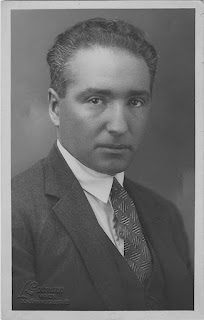
Wilhem Reich (1897-1957)
Photo possibly by A. A. Brill (c. 1922)
 
Once we open up to the flow of energy within our body, 
we can also open up to the flow of energy in the universe.


I. Opening Remarks
 
I could have featured Reich in my recent series on the grand perverts of Austria, but decided that he is such a unique figure that he deserves a post in his own right. 
 
I'm not, however, very familiar with his work: I once read an English translation of Die Massenpsychologie des Faschismus  (1933) [1] and a funny little book entitled Listen, Little Man! (1948), in which he outlined his political philosophy (an idiosyncratic form of libertarian socialism). 
 
Mostly I know of Reich due to the fact that he's mentioned with admiration by Deleuze and Guattari in Anti-Oedipus (1983) [2]
 
That, and the fact that Kate Bush once wrote a song inspired by him [3].
 
 
II. The European Years
 
Wilhelm Reich was born in 1897, in Dobzau, Galicia, then part of the Austro-Hungarian Empire, but now in western Ukraine and awaiting the arrival of Russian bombs and soldiers. 
 
Although both his parents were Jewish, Wilhelm was brought up to speak only German and punished for using Yiddish expressions, or playing with the local Yiddish-speaking children. Oy vey! 
 
Wilhelm was homeschooled until the age of twelve. But when his mother was discovered having an affair with his live-in tutor and soon afterwards committed suicide, he was sent off to an all boys' school. Reich would later write about these events in his first published paper, detailing his shame and guilt, but also expressing his own incestuous fantasies involving his mother.
 
After the War, in which he served on the Italian front, Reich headed for Vienna, where he enrolled in law at the University. However, he found the subject tedious and so switched to medicine. Although he found this much more to his liking, he rejected the mechanistic concept of life which then dominated in favour of a more vitalist philosophy.
 
In 1919, he had a fateful first meeting with Freud, from whom he had requested a reading list for a seminar on sexology. Interestingly, it seems they left an equally strong impression on one another and Freud smoothed the younger man's way into the Vienna Psychoanalytic Society and encouraged him to start meeting with patients of his own; one of whom, 19-year-old Lore Kahn, he was soon fucking, even though Freud had advised not to get romantically involved with patients.
 
Sadly, she became seriously ill and died shortly after the affair with Reich began [4]. Swiftly putting his grief to one side, he then seduced another patient, Annie Pink - an 18-year-old medical student and friend of Frl. Kahn's - though he did eventually do the decent thing and marry her, at the insistence of her father, and she went on to become a well-known shrink in her own right.    
 
Despite what would now be regarded as gross professional misconduct (at the very least), Reich was apppointed deputy director of Freud's outpatient clinic and he worked there until 1930, forming his own theories on human psychology to do with repetitive patterns of behaviour, speech, and physical posture serving as ego defence mechanisms, or what he termed character armour.     
 
Reich was highly regarded by his contemporaries and colleagues at this time and many found his lectures and seminars spellbinding. His first book was also well received and won him further professional recognition, including from Freud, who in 1927 arranged for his appointment to the executive committee of the Vienna Psychoanalytic Society.   
 
Thus, everything was coming up Rosen for Reich and he seemed to have a bright future ahead; despite one of his early patients protesting that Reich was, in fact, a psychopath; and despite the fact that Freud was increasingly concerned about the theory that psychic health depended upon the full discharge of libidinal energy. 
 
Such ideas, tolerated at first within the psychoanalytic community, would later be ridiculed. And when Reich tried to reconcile his new theories with Marxism, he would increasingly be regarded as part sexual revolutionary and part sexual lunatic (although, to be fair, he was certainly not the only intellectual attempting to marry psychoanalysis and Marxism at this time).     
 
In 1927, Reich opened half-a-dozen Sex-Pol clinics in Vienna, where members of the proletariat could receive free psychoanalysis, political instruction, and contraceptives. These proved so popular that Reich also took to the streets in a mobile clinic and began distributing sex-education pamphlets door to door.
 
This same year also saw publication of Die Funktion des Orgasmus, which he dedicated to Freud. Unfortunately, the latter was not overly impressed and took two months before sending a short thank you note (which didn't go down too well with Reich). Freud's view, essentially, was that it was an oversimplification to view everything in terms of orgastic potency.   
 
In 1930, Reich and his wife moved to Berlin, where he continued his work and set up more Sex-Pol clinics. Although he joined the German Communist Party, his new comrades were troubled by his promotion of sexual freedom for everybody - including adolescents - and they eventually refused to publish his material. 
 
And so Reich discovered that moral puritanism belongs as much on the radical left as the reactionary right. 
 
Having said that, it was the Nazis who, in 1933, most vociferously attacked his work and forced him to flee Germany with his mistress, a dancer called Elsa Lindenberg. The couple initially retreated to Vienna, then moved to Denmark, Sweden, and finally settled in Norway, where he and Lindenberg were to remain for five years [5].
 
It was whilst in Oslo, that Reich attempted to ground his orgasm theory in biology, exploring whether the libido was in fact a form of bio-electricity or a chemical substance [6]. These investigations led on to his bion experiments, where he played Dr. Frankenstein and sought to create rudimentary new forms of life (and explain the origin of cancer). 
 
Unsurprisingly, many within the scientific community in Norway expressed their scepticism regarding Reich's work. Whilst some simply dismissed his theories on bions as nonsense, others accused him of being ignorant of even basic scientific procedures and micro-biological facts. When in 1938 his visa expired, several scientists argued against this being renewed and his case became something of a cause célèbre in Norway [7]
 
When Reich eventually left Norway, he did so feeling a little humiliated and full of anger for those who had denounced him and ridiculed his work. The scandal - and his various love affairs - had also taken its toll on his relationship with Lindenberg. And thus when Reich asked her to accompany him to the United States, she declined, leaving him to set sail all on his lonesome. 
 
Details of Reich's American years can be found in part two of this post: click here.
 
 
Notes
 
[1] It was the 1983 Pelican edition, The Mass Psychology of Fascism, trans. Vincent R. Carfagno.
 
[2] For Deleuze and Guattari, Reich deserves credit for being the first to address the question of the relationship between desire and the social field (and for daring to go further in this direction than Marcuse). Whilst admitting his work has its problematic aspects, they find Reich's comparison of sexuality with cosmic phenomena, such as electrical storms or sunspot activity, preferable to Freud's "reduction of sexuality to the pitiful little familialist secret" and it was Reich, more than anyone else, who upheld the great perverse truth of psychoanalysis, i.e., "the independence of sexuality with regard to reproduction".
      See: Gilles Deleuze and Félix Guattari, Anti-Oedipus, trans. Robert Hurley, Mark Seem, and Helen R. Lane, (University of Minnesota Press, 1983), pp. 291-92.
 
[3] Kate Bush, 'Cloudbusting', a single release from Hounds of Love, (EMI, 1985): click here to play and watch the offical video, dir. Julian Doyle, and ft. Donald Sutherland in the role of Wilhelm Reich.
 
[4] Lore Kahn's parents claimed that their daughter had died after a botched illegal abortion, possibly performed by Reich himself. Whilst recognising the tragedy of what happened, Reich also found his role within the young woman's death and subsequent suicide of her mother absurdly amusing, noting in his diary: 'I am acting out a comedy, while causing the people around me to die!'   
 
[5] Hopes that he might be able to set up shop in London were dashed when it became clear that support from the psychoanalytic circle in England was not going to be forthcoming. It had been decided that Reich had unresolved hostility issues and was living in a world of his own. 
      The unique form of treatment Reich developed from 1930 onwards also caused eyebrows to be raised and alarm bells to sound. Based on touch, it involved patients stripping off and allowing him to perform a special type of massage in order to loosen their body armour (i.e., their muscular and characterological rigidity). In the hope of retrieving repressed childhood memories and triggering genuine feelings, Reich would also ask patients to physically simulate certain emotions (such as anxiety, rage, and ecstasy). If the session was successful, he claimed to see waves of pleasure move through the bodies of his patients (what he called the orgasm reflex or streaming). Initially wanting to call this new treatment orgasmotherapy, Reich evetually settled on the name of vegetotherapy (i.e., arousal therapy).  
 
[6] In 1935, Reich also bought an oscillograph and attached it to student volunteers at the University of Oslo, who agreed to touch and kiss each other while he monitored the results. As you do ...
 
[7] The affair generated a good deal of press coverage throughout 1938, with more than 165 articles and letters appearing in Norwegian newspapers, the vast majority of which attacked Reich and his work. 


21 Sept 2019

Ours Is Essentially a Tragic Age: Notes on the Opening of a Novel

Two female readers of the Penguin edition of 
D. H. Lawrence's Lady Chatterley's Lover (1960)
showing little interest in the opening lines


Lady Chatterley's Lover opens with the following paragraph:

"Ours is essentially a tragic age, so we refuse to take it tragically. The cataclysm has happened, we are among the ruins, we start to build up new little habitats, to have new little hopes. It is rather hard work: there is now no smooth road into the future: but we go round, or scramble over the obstacles. We've got to live, no matter how many skies have fallen."

I think it's an opening that deserves to be looked at a little more closely ...


One immediately notes the use by Lawrence of an omniscient third person narrator; one who sees and knows all things in a god-like manner, even the private thoughts and feelings of the characters. As one Nietzschean little girl informed her mother, there's something indecent about this.

One suspects that Lawrence would seek to justify his narrative technique in terms of perfect empathy rather than epistemological transparency, but I still find it questionable that although in this opening paragraph the narrator describes Connie's position in a rather matter-of-fact manner, thereby ironically distancing himself from her, he will later describe things from Connie's perspective in a far more lyrical fashion, as if even her most intimate experiences were also his own and ours as readers.

Thus, whilst we get to see the workings of Clifford's mind, we get to share Connie's orgasm and made fully complicit in her sexual shenanigans. That's what happens when free indirect discourse meets the pornographic imagination - interiority is taken to a perversely material conclusion.   

What I'd like to suggest is that whenever a narrator says ours is we should be on our guard; we certainly shouldn't be lulled into false consensus or made an accessory after the fact. His - and maybe Connie's - may be an essentially tragic age, but it's not compulsory for any reader to subscribe to this belief.

And what does this claim mean anyway, for those of us living in an essentially inessential age that lacks any intrinsic character or indispensable quality? Lawrence would doubtless say that's the nature of our (postmodern) tragedy; that we have no soul or substance and live accidental lives of random contingency. But Lawrence is more of a metaphysician than he often pretends and still clings to the verb to be in all seriousness. 

Essential or otherwise, it seems that the narrator employs the idea of tragedy in a conventional sense; i.e. this is a post-cataclysmic period of great suffering, destruction, downfall etc. But it's important to note that Lawrence is not a tragic writer and, in fact, hates tragedy as usually conceived; thus his refusal to take it tragically.

This saying no to the tragic reception of tragedy is part of Lawrence's admirable attempt to take a great kick at misery and his refusal to wallow in his or anyone else's misfortune. Lawrence despises those who, in his words, are in love with their own defeat; he would be the last person on earth to subscribe to the contemporary cult of victimhood. 

But what is the terrible deluge that is supposed to have happened? Obviously, it's a reference to the Great War. But, as a Nietzschean, I also conceive of this cataclysmic event as the death of God - a tragic but also joyous event that changes everything and creates opportunities to build new little habitats and opens new spaces for thought in which we might also allow ourselves to dream again and form new little hopes.  

Nietzsche famously (and cheerfully) writes of this event in The Gay Science and the rejuvinating effect it has upon free spirits who feel themselves "irradiated as by a new dawn" by the news that God is dead:

"Our hearts overflow with gratitude, astonishment, presentiment and expectation. At last the horizon seems open once more, granting even that it is not bright; our ships can at last put out to sea in face of every danger; every hazard is again permitted to the discerner; the sea, our sea, again lies open before us; perhaps never before did such an 'open sea' exist."

Thus, to be among the ruins needn't be thought negatively; needn't oblige one to give in before one starts. Indeed, whilst Lawrence doesn't quite go so far as the Situationists and believe in the ruins, I think he understands their appeal and the fun to be had with fragments - or bits as he calls them in Kangaroo. Indeed, one could read the cataclysm as the collapse of grand narratives and understand the building of new little habitats as the attempt to find more localised, more provisional, more relative truths that aren't coordinated by an ideal of Wholeness or swept up into an Absolute.

Almost one is tempted to suggest that in the following paragraph from Anti-Oedipus Deleuze and Guattari are rewriting Lawrence's opening to Lady C. and theoretically expanding upon his thinking on plurality and multiplicities: 

"We live today in the age of partial objects, bricks that have been shattered to bits, and leftovers. We no longer believe in the myth of the existence of fragments that, like pieces of an antique statue, are merely waiting for the last one to be turned up, so that they may all be glued back together to create a unity that is precisely the same as the original unity. We no longer believe in a primordial totality that once existed, or in a final totality that awaits us at some future date. We no longer believe in the dull gray outlines of a dreary, colorless dialectic of evolution, aimed at forming a harmonious whole out of heterogeneous bits by rounding off their rough edges. We believe only in totalities that are peripheral. And if we discover such a totality alongside various separate parts, it is a whole of these particular parts but does not totalize them; it is a unity of all of these particular parts but does not unify them; rather, it is added to them as a new part fabricated separately." 

Finally, we come to the last line: We've got to live, no matter how many skies have fallen. I suppose that's true - even if it's factually not the case. For we could, of course, choose to die; as Gerald chooses to die at the end of Women in Love, rather than accept being broken open once more like Mellors, or voluntarily leave the tomb like the man who died.

And learning how and when to die at the right time is as much an art, requiring just as much courage, as living on regardless of the circumstances and becoming one of those unhappy souls; individuals like Clifford who are afraid to die and fall silent, determined to continue asserting themselves even when they have fallen out of touch with others. 


Notes

D. H. Lawrence, Lady Chatterley's Lover, ed. Michael Squires, (Cambridge University Press, 1993), p. 5.

Gilles Deleuze and Félix Guattari, Anti-Oedipus: Capitalism and Schizophrenia, trans. Robert Hurley, Mark Seem and Helen R. Lane, (University of Minnesota Press, 1983), p. 42.

Nietzsche, The Gay Science, trans. Walter Kaufmann, (Vintage Press, 1974), V. 343, p. 280. 

See also: Catherine Brown, 'Resisting Tragedy: A Report on the International D. H. Lawrence Conference, Paris, 2018', in the D. H. Lawrence Society Newsletter (Winter 2018/19), or click here to read in a pre-edited version on her website.

Interestingly, Dr. Brown argues that Lawrence adopts various literary means and devices in order to resist tragedy, whereas the narrator calls for a refusal - something that those researching this topic might like to consider. As a nihilist, I'm more attracted to a strategy of active negation (refusal) than offering a dialectical form of (often complementary) opposition (resistance): click here for an explanation why.  


25 Apr 2019

On Holism and Anti-Holism


Despite what some commentators suggest, I wouldn't describe myself as a reductionist.

But, as might be imagined, my love of cracks, gaps, fragments, ruins, ruptures, breakdowns, and all those things that belong to what might be termed a gargoyle aesthetic, means that I have little time for those monomaniacs who subscribe to holistic thinking and insist on a smutty state of Oneness in which all parts are reconciled and find their completion. 

Thus, it's mistaken to read the multiplicity of posts on this blog and then attempt to understand them as a Whole: the will to a system, says Nietzsche, betrays a lack of integrity.

Ultimately, I'm sympathetic to Blanchot's suggestion that we learn to think about the relationship between literary fragments in terms of sheer difference; as things that are related to one another only in that each of them is unique and without, as Deleuze and Guattari note, "having recourse either to any sort of original totality (not even one that has been lost), or to a subsequent totality that may not yet have come about".

In a passage that captures perfectly the anti-holistic spirit of Torpedo the Ark as desiring-machine, the latter write:   

"We live today in the age of partial objects, bricks that have been shattered to bits, and leftovers. We no longer believe in the myth of the existence of fragments that, like pieces of an antique statue, are merely waiting for the last one to be turned up, so that they may all be glued back together to create a unity that is precisely the same as the original unity. We no longer believe in a primordial totality that once existed, or in a final totality that awaits us at some future date. We no longer believe in the dull grey outlines of a dreary, colourless dialectic of evolution, aimed at forming a harmonious whole out of heterogeneous bits by rounding off their rough edges. We believe only in totalities that are peripheral. And if we discover such a totality alongside various separate parts, it is a whole of these particular parts but does not totalize them; it is a unity of all of these particular parts but does not unify them; rather, it is added to them as a new part fabricated separately."

In addition to the artistic implications of this, a number of logical, ethical, and political consequences also follow; ones that, to me at least, appear far more attractive (and more radical) than those that follow on from holism which, unfortunately, is a concept invoked here, there, and everywhere within contemporary culture - even by people who should know better (i.e., people with the ability to be critically self-reflective).

We hear about holistic models of everything; healthcare, education, science, spirituality, etc. Even politicians talk about the need for joined up government. Again, to quote Nietzsche: I mistrust all systematisers - but today it's become impossible to ignore them.

These advocates of holistic thinking speak in fuzzy terms about inclusion, integration, and harmony. But such idealism builds churches and concentration camps; it erases real difference, fears otherness, and ultimately wants to subordinate the individual to a superior Whole (the Party, the State, Humanity). 

I find the thought of One Love, One World, One People, nauseating. If this makes me a reductionist, or a nihilist, then so be it ...


See: Gilles Deleuze and Félix Guattari, Anti-Oedipus, trans. Robert Hurley, Mark Seem and Helen R. Lane, (University of Minnesota Press, 1983), p. 42. 


1 May 2016

On Revolutionary Fun (A Message for May Day)


If you make a revolution, writes Lawrence, don't act with ascetic militancy in the name of some grand ideal, or in order to seize control of the economy; make it simply for the pleasure of gobbing in the eye of those who would assert authority and the anarchic joy of upsetting the old order.

As a manifesto, this will doubtless strike many terrorists of theory interested in preserving the pure order of politics and the serious business of revolution, as puerile and irresponsible; the sort of romantic tosh that only a poet can get away with.

Nevertheless, it rather nicely anticipates the poststructuralist thinking that flourished prior to, during, and after the festive upheaval of May '68 and, indeed, encapsulates the insouciant nihilism of punk as conceived by a Situationist-inspired Malcolm McLaren in the mid-late Seventies.    

What unites Lawrence with Deleuze and ties Anti-Oedipus to Never Mind the Bollocks, is a perverse refusal to conform to the accepted way of doing things as prescribed by tradition (be it a literary, philosophical, or artistic tradition); they challenge and change the terms of the debate and shift the zone of combat, discrediting old idols in the process.

But above all, these figures and these works show us that we do not have to be sad or self-serious in order to be radical. Thus, paraphrasing Lawrence if I may: If you want to torpedo the ark, don't do it in ghastly seriousness, don't do it in deadly earnest - do it for fun.


See: D. H. Lawrence, 'A Sane Revolution', in The Complete Poems, ed. Vivian de Sola Pinto and F. Warren Roberts, (Penguin Books, 1977). 


20 Mar 2014

Fascism May Be Fascinating, But Do Not Become Enamoured of Power


Designed by Hugo Boss, who was an active party member and not simply a collaborator with the Nazi regime, the SS uniform was, as Susan Sontag writes, "stylish, well-cut, with a touch (but not too much) of eccentricity". 

Close-fitting and all black in colour, the uniform suggested not only malevolent authority and the legitimate exercise of violence, but also the aestheticization and eroticization of power. It was an outfit designed to make its wearer not only feel superior, but look supremely beautiful. 

Little wonder then that this menacing but seductive uniform - complete with various items of regalia, cap, gloves, and boots - has continued to have a place within both popular culture and the pornographic imagination; filmmakers, fetishists, and fashionistas, for example, are united in their fascination for this ultimate fascist ensemble.       

But of course, as Sontag also points out, most people who fantasise sexually about being dressed to kill and go a little weak at the knees when they see an SS uniform are not signifying their approval of what the Nazis did ("if indeed they have more than the sketchiest idea of what that might be"). They are simply interested in the staging of their own desire and the acting out of their own fears and obsessions.

And perhaps this is a good thing. For perhaps, as Foucault said, in order to rid our hearts and dreams of fascism it is necessary to say and do shameful, ugly things not because we believe in their truth, but so that we won't have to believe in their truth any longer. Perhaps the aim is not ecstasy, but innocence; the fantasy is not death, but freedom (from that which causes us to love power and revere authority in the first place).


Note: Susan Sontag's essay, 'Fascinating Fascism', from which I quote in the above post, can be found online at: www.nybooks.com/articles/archives/1975/feb/06/fascinating-fascism/

12 Feb 2014

Les Demoiselles d'Avignon

Laura Hollick as one of Picasso's Demoiselles d'Avignon 
Photo by Kevin Thom (2010)  
www.soulartstudio.com

There's simply no point in maintaining a figurative conception of sex based on a series of identical images, unless one wishes to keep love constrained under the yoke of idealism. 

Perversity becomes philosophically of interest when it sets itself the task not merely of finding ever-more sophisticated pleasures, but also of "tirelessly taking apart egos and their presuppositions" and thereby "liberating the pre-personal singularities they enclose" (to quote Deleuze and Guattari if I may). 

It would be nice, for once, to know a woman in a purely impersonal manner; to experience her as a vibration of forces or some kind of event far below the level of identity; to see her as Picasso saw les demoiselles d'Avignon - en route to pure abstraction.