Showing posts with label david bowie. Show all posts

3 Sept 2026

Dancing in the Rain: Notes on The Wild Boys

Simon, John, Andy, Nick, and Roger - 
the (not so) Wild Boys of Duran Duran 
Photo by Mike Owen (1984)

 
I.
 
Just to be clear: I don't much like - and have never much cared for - Duran Duran [1].
 
Having said that, their single 'The Wild Boys', released in October 1984 [2], intrigues because of its controversial point of literary reference: namely, the novel of that title by cult American author William S. Burroughs.
  
 
II. 
 
The Wild Boys: A Book of the Dead (Grove Press, 1971) tells the story of a group of youths who, in a dystopian near-future, revolt against civilisation and embrace a life of savage violence, drug-fuelled hedonism, and sadistic homosexuality. 
 
As a piece of fiction, it isn't really my cup of tea: too experimental for my tastes [3].
 
Nevertheless, if one reads it as a work of radical (anti-assimilationist) queer theory akin to Monique Wittig's Les Guérillères (1969) [4], then it certainly has philosophical interest and it remains a favourite book among those who align themselves to the counterculture and wish to challenge heteronormative ideas and values.
 
 
III.
 
Apparently, the idea for the song came from the Australian director Russell Mulcahy, who wanted to make a full-length feature film based on Burroughs's surreal and sexually explicit novel. 
 
Mulcahy asked the band to produce a soundtrack and, excited by the proposal, Simon Le Bon immediately began writing some lyrics for a title track based on Mulcahy's brief synopsis of the book [5].  
 
Meanwhile, the rest of the group set about writing the music, taking inspiration less from Burroughs and more from Frankie Goes to Hollywood who had hit the number one spot in the UK charts earlier that year with their phenomenal debut single 'Relax' [6].    
 
'The Wild Boys' became one of the band's highest-charting singles, peaking at number two in the charts in both the UK and US. Naturally, Mulcahy directed the accompanying video which was filmed on the 007 Stage at Pinewood Studios and cost an outrageous sum for the time (over a million pounds).  
 
 
IV.  
 
Mulcahy originally intended his award-winning music video to act as a teaser for his proposed cinematic adaptation of Burroughs's novel. Unfortunately, however, this ambitious film project never came to fruition [7]. 
 
Well, I say unfortunately, but perhaps it's just as well ... 
 
For I worry, having seen how the Duran Duran video gives Burroughs's deliriously homoerotic vision a boring, hetero-masculine, Mad Max-style makeover, what else Mulcahy - despite being gay - would have done to straightwash [8] and tame the story of The Wild Boys.
 
Ultimately, despite his vulgar auteur tag, Mulcahy is very much a mainstream commercial director rather than an underground filmmaker and should probably be prevented from even considering certain projects. 
 
Any adaptation of The Wild Boys that stays even halfway true to the book is never going to be given the greenlight by a major studio, open in cinemas across the land, or find a wide audience - not even among Durannies and members of the MTV generation.      

Notes 
 
[1] When my girlfriend Gillian bought a copy of the Duran Duran single 'Save a Prayer' in August 1982 (taken from the album Rio) it caused a huge row. I regarded it as both a betrayal of everything punk stood for and a compromise with everything punk had sought to destroy. The fact that she was defended in her actions by my friend Kirk Field at the time - as he also liked this new wave ballad - is something I still haven't forgotten or quite forgiven to this day. 
 
[2] 'The Wild Boys' was the only studio track on the Duran Duran live album Arena (Parlophone, 1984), and was produced by Nile Rodgers, who gave it the same kind of energy as he had given 'The Reflex' - the number one single released by Duran Duran in April 1984, from the album Seven and the Ragged Tiger (EMI, 1984).   
 
[3] This is not to deny the writer's genius or the book's greatness. For an insightful (and appreciative) review of The Wild Boys by Alfred Kazin in The New York Times (12 Dec 1971), please click here
 
[4] For a discussion of Wittig's novel (and its influence on the thinking of Nick Land), see my post titled 'Fanged Noumena: On Nick Land and the New Amazons' (1 June 2026). 
      I'm aware that Burroughs wrote from a very different perspective to Wittig, but I think there's a similar political logic and an aesthetics of negation at play in their writings. For example, both authors reject notions of reform, explicitly calling for total revolution and the destruction of bourgeois institutions such as the family. They also both believe that this revolution against the straight mindset is something that must be fought at all levels - including (and not least of all) the level of language. 
 
[5] It might be noted at this point that Russell Mulcahy and the boys from Duran Duran weren't the first to be inspired by Burroughs's novel. Malcolm McLaren, for example, was a huge William Burroughs fan and before settling on the name Bow Wow Wow for the band he assembled and managed after the Sex Pistols, he considered calling them the Sex Gang Children - a phrase he coined based upon his reading of The Wild Boys
      And - predictably - David Bowie also credited The Wild Boys with aesthetically influencing the creation of his Ziggy Stardust persona, for which he thanked Burroughs when they met in person at an event in November 1973. This successful encounter, which was featured in Rolling Stone in February 1974, is recalled by Jon Savage in 'When Bowie met Burroughs', The Guardian (9 Mar 2013). 
 
[6] 'Relax', by Frankie Goes to Hollywood, was produced by Trevor Horn and released on ZTT Records in October 1983. It reached number one in the charts at the end of January 1984 and was one of the decade's most controversial records - far more so than Duran Duran's 'Wild Boys' - it was even subject to a BBC ban owing to the sexually explicit nature of the lyrics (and Mike Read's distaste for such). A different version of the song features on the Frankie Goes to Hollywood debut album Welcome to the Pleasuredome (ZTT, 1984). 
      The band were marketed by ZTT co-founder Paul Morley in direct opposition to their pop rivals; a quarter-page ad for the single appeared in the music press declaring that Frankie Goes to Hollywood were going to make Duran Duran 'lick the shit off their shoes'. 
      The original video for the song, directed by Bernard Rose, was set in an S&M themed gay nightclub and featured the band members interacting with several characters of the kind that one might expect to encounter in such a venue. Not surprisingly, this too was banned by both the BBC and MTV. I provide a link to it so that readers can compare and contrast it with the Wild Boys video made by Mulcahy (I think I know which Burroughs would have preferred). 
 
[7] Speaking of projects that never came to fruition ... Burroughs himself had, in fact, written a screenplay based on his novel, which he hoped to have produced as a low-budget, hardcore gay porn film. However, after negotiations with the notorious Fred Halsted came to nothing, Burroughs abandoned the idea. 
      On a happier note, in 2017 The Wild Boys was finally adapted into a full-length feature film titled Les garçons sauvages, directed by Bertrand Mandico. It's not what one would call a faithful adaptation - more a clever reimagining. Thus, while it adopts certain ideas and carries over a transgressive spirit from the novel, the film replaces Burroughs's fragmented, non-linear narrative with a continuous plot and introduces supernatural elements to do with gender metamorphosis that are entirely absent from the original work. However, while moving away from the sadistic cisgender male homosexual experience, it remains defiantly a queer, anti-heteronormative movie - just all a bit more dreamlike. Click on the link provided to watch the trailer.  
 
[8] Straightwashing refers to the manner in which fictional gay and queer characters are portrayed as straight in order to make their representation comply with heteronormativity. A common justification for such queer erasure includes a concern with mainstream audience reaction. 


7 Jul 2026

No, Jasmine, Cliff Richard Isn't Cool

Cover of the debut album by Cliff Richard and his band 
the Drifters (later known as the Shadows) 
Columbia (EMI) (1959) 
 
I. 
 
The latest edition of SIG News (#5 2026) contains a provocative piece by Jasmine Howard [1] reflecting on one of her pop heroes. 
 
In it, she poses the question: 'Is Cliff Richard cool?' and attempts to play devil woman's advocate by making the case for the so-called Peter Pan of Pop [2]. 
 
Howard is, of course, by no means the first person to do this. Back in 2013, for example, Kiwi author Tim Roxborough claimed not to care if others thought Cliff uncool, writing: 
 
"Cliff may be celibate, he may annoy some with his public professions of his Christian faith [...] and he may have had a knack for singing Christmas number one hits that sap the tragically hip's will to live. But get passed [sic] that and he's the owner of one of the finest, most adaptable voices in popular music history." [3]
 
More recently, Stuart Penny also wrote a few words in defence of Sir Cliff:
 
"I know what you're thinking. With his goody two-shoes image and cringeworthy Wimbledon tennis rain break singalongs, the Peter Pan of Pop may have been hopelessly, desperately, terminally uncool for more than half a century, but it wasn't always that way." [4] 
      
In for a pound, Penny continues:
 
"I'm not ashamed to say that before the Beatles and Dylan, before discovering electric blues, folk, jazz and psychedelia, in fact before just about every other kind of music I grew to cherish, Cliff was my guy. The infatuation didn't last much beyond late 1962 and the arrival of the Fab Four, it's true, but his early singles, some of which were (and remain) excellent slabs of well-produced 60s pop, will always have a special place in my heart." [5]  
 
 
II. 
 
As I think is clear, even his biggest fans and would-be defenders concede that Cliff isn't cool. 
 
Talented, good-looking, clean-cut, devoted to his God and to his mother Dorothy, but not cool - an aesthetic quality that relates not only to appearance and style, but to attitude and behaviour (and so is more than merely being trendy or fashionable). 
 
Much like art, cool is notoriously difficult to define. But even if you can't quite describe it, you know it when you see it - and you also know what it isn't (and Cliff isn't it). 
 
Malcolm McLaren used to say that the coolest thing he'd ever seen was when Edward Tudor-Pole walked on stage auditioning to be the new lead singer with the Sex Pistols and flipped a cigarette in the air, caught it on his foot, and then flicked it into his mouth. And that is pretty cool - thus not something one can ever imagine Cliff doing (unsurprisingly, he doesn't smoke).   

Essentially, cool is tied to evil; to rebels, gangsters, rockers, and all those unconstrained by authority and who live in defiance of rules and conventions. 
 
Having said that, the idea of cool has now been fully recuperated and coolness is now mostly a marketing strategy; something manufactured and sold by those looking to capitalise on trends and subcultures. In fact, some commentators argue that cool is the central ideology of consumer capitalism.   
 
And so, ironically, it may be the case that the coolest people today are those who reject the stereotype and cliché of coolness entirely (though, sorry Jasmine, that still doesn't include Cliff - a man who, despite his name, completely lacks edge). 
 
 
III. 
 
In her effort to puzzle out why Cliff is considered so uncool, Ms Howard compares his career and public image to that of Elvis - which is certainly a brave and bold (some might say foolhardy) move, not least because Presley is incomparable as an artist in terms of cultural impact, vocal versatility, and his on-stage presence. The fact that he piled on the pounds in his final years - as Cliff was only too quick to point out [6] - does nothing to detract from his unique genius.    
 
Even Howard's claim that Cliff was "just as successful as Elvis" [7] - from a purely statistical perspective (i.e., in terms of record sales and UK number one singles) - doesn't quite add up. 
 
For whilst Cliff undeniably commands a spectacular chart legacy as the only artist to score a UK number-one single across five consecutive decades (from the 1950s to the 1990s), he remains firmly in the King's shadow when we look at the Official UK Charts' historic tally. 
 
Cliff has a highly respectable fourteen number-one singles; but Elvis has a staggering twenty-one UK number one hits. Further, whilst Cliff has sold over 250 million records worldwide across his 68-year career, this figure is dwarfed by the more than one billion Elvis records sold.
 
To claim parity when it comes to their commercial success is therefore inaccurate - and also, we might add, when did commercial success and longevity as an artist ever equate with cool or relevance? Some of the coolest singers hardly troubled the charts and died young (Ian Curtis is an obvious example). 
 
Cliff's ability to score number-one hits across several decades is a testament to an aging, fiercely loyal fanbase and clever marketing, not cultural impact. David Bowie also sold a lot of records and had a long career, but he redefined music, fashion, and societal norms, whilst Cliff remained artistically stagnant; his later chart-toppers were not driven by musical innovation, but by novelty appeal and seasonal sentimentality, such as 'Mistletoe and Wine'. 
 
  
IV. 
  
Apart from his commercial success and longevity, attempts to defend Cliff as cool are also often based upon his early days as a credible rock 'n' roller who opened the way for British pop music and his national treasure status. 
 
Let's briefly examine each of these points ...
 
Firstly, it's true that his 1958 hit debut single 'Move It' (written by Ian Samwell) might be viewed as marking the birth of British rock 'n' roll, as acknowledged by John Lennon and many others. However, Cliff almost immediately abandoned his leather-jacketed persona and within a few years transitioned into a safe, sanitised, family-friendly performer who happily established himself in the world of light entertainment and Eurovision.  
 
Thus, if Cliff paved the way, it was a road that subsequent generations of British rockers were desperate to veer off. For the punk generation in particular, Cliff was the ultimate symbol of establishment compliance and everything they hated about Top of the Pops (it will come as no surprise to discover that he made more appearances on the iconic BBC music show than any other solo artist, with over 150 performances).   
 
As for his national treasure status, which rests on the idea that he's basically a good egg, even this might be questioned in light of his politically suspect views on women in the workplace and parenting, for example [8]. Coolness may involve a degree of studied indifference, but it also requires a degree of cultural sensitivity and Cliff has sometimes used his public platform to judge others from a position of detached privilege. 
 
Ultimately, his wholesome image disguises a rigid (often reactionary) moralism that may be Christian but isn't cool [9] - we don't like being lectured to by pious pop stars, thank you very much.        
 
 
V. 
 
Finally, I'd like to remind Jasmine - a canny lass from the North East of England [10] - of a famously surprising televised encounter between her hero, Cliff, and Thomas (Mensi) Mensforth, the lead singer of South Shields punk band the Angelic Upstarts [11]. 
 
Rather than playing along with the polite banter expected by mainstream television, the fiercely intelligent punk vocalist confronted the Peter Pan of Pop over his privileged celebrity status and his religious faith. However, if producers had hoped for an explosive, foul-mouthed slanging match, they were disappointed. 
 
While Cliff spoke of personal salvation and his pop career, Mensi steered the debate toward systemic political issues: religious sectarianism, police brutality, and social deprivation. He emerged as someone who genuinely cared about the contemporary world around him, rather than what had occurred in the Holy Land two thousand years prior. 
 
All Cliff's tried-and-tested defence mechanisms - polite smiles, deflection, and breezy showbiz charisma -proved useless against the raw passion of Mensi’s arguments. The Peter Pan of Pop was exposed as having little concern for the struggles of everyday people in Thatcher's Britain.  
 
  
Notes
 
[1] Edited by Russ Bestley, Tim Gibney, Kevin Quinn, and Roger Sabin, Sig News brings the work of the Subcultures Interest Group (SIG) to a wider audience. Operating out of the University of the Arts London (UAL), this diverse, informal collective focuses broadly on the politics of style. The publication offers an eclectic mix of articles by a disparate group of authors from both within and outside UAL. For more information, click here
      Postgraduate student Jasmine Howard wrote her MA dissertation on class and clothing in the North East of England in the mid-late 1960s; see the post on Torpedo the Ark dated 30 March 2025 in which I discussed her granny, my mother, and the likely lasses: click here.   
       
[2] This nickname is not a self-styling coined by Richard himself, nor one he particularly cares for as it creates pressure upon him to always appear youthful when performing on stage before his fans. It was actually coined by music journalist Keith Altham of the NME in 1972 and was quickly taken up by the press and public alike. 
 
[3] Tim Roxborough, 'Why Cliff Richard Is Much Cooler Than You Think', The Roxborough Report (26 January 2013): click here
      Roxborough goes on to inform his readers that as well as having a great voice Cliff is also "said to be one of Britain's most generous philanthropists", saying that this is important when considering Richard the man and not just Richard the artist. 
      I might point out, however, that philanthropy is a contentious issue. Whilst it directs resources to worthy causes, it can also function as a tool for the wealthy to virtue signal and ease their conscience. It can also allow donors power over social agendas while providing them with significant tax benefits.   
 
[4] Stuart Penney, 'A Few Words In Defence Of Sir Cliff Richard', And Now ... It's All This! (21 August 2025): click here
 
[5] Ibid.
 
[6] During an appearance on ITV's This Morning (20 Nov 2023), Cliff was asked if he had ever met Elvis: he hadn't. But he revealed that he had once turned down an opportunity to do so and be pictured with Presley on the grounds that the latter had put on a lot of weight and no longer looked as good as he had in his prime. 
      Probably to his surprise, the comment immediately went viral and caused a massive uproar. Viewers of the show accused him of fat-shaming and were particularly upset that he made the comments whilst sitting next to popular host Alison Hammond, a plus-sized presenter. This is just one of several occasions in which Cliff - usually known for his polite and overly cautious public persona - came across as tactless and uncool, sparking controversy.  
 
[7] Jasmine Howard, 'Is Cliff Richard Cool?', SIG News 5 (1 Sept 2026), p. 12. 

[8] In a controversial 1994 interview with Bella magazine, the Bachelor Boy claimed that women cannot successfully juggle both careers and children. He also blamed working mothers for the breakdown of discipline in society. These remarks drew sharp criticism from the public and parenting organisations at the time, with representatives from groups like Parents at Work dismissing his comments as 'complete and utter nonsense'. 
 
[9] Amusingly, Cliff even managed to alienate sections of the Christian community in 1999 when he set the words of the 'Lord's Prayer' to the tune of 'Auld Lang Syne'. The resulting record - titled 'The Millennium Prayer' - was almost universally loathed by music critics, but, more surprisingly, various church leaders and Christian commentators condemned it as a gimmicky and cynical exploitation of faith for commercial chart success (even though Cliff donated the proceeds to charity).

[10] As the child of parents from Tyneside - my father was born in Gateshead and my mother in Whitley Bay - I trust I am allowed to say this without sounding patronising. 
 
[11] The meeting between Sir Cliff and Mensi was recorded by Anglia Television for an episode of the late-night religious and current affairs series Something Different (hosted by Stewart White) and was broadcast on 25 January 1980 (or early March in some ITV regions). Click here to watch an excerpt on YouTube (as preserved by Wayback Machine, the Internet Archive).    
 
 
Musical bonus: Angelic Upstarts, 'The Young Ones', from the album Teenage Warning (Warner Bros., 1979): click here. The track also featured as the B-side to the single 'Teenage Warning' (1979), which reached No. 29 in the UK charts.
      The song, written by Sid Tepper and Roy C. Bennett, was made famous by Cliff Richard and the Shadows and is the title song to the 1961 film The Young Ones (dir. Sidney J. Furie). 
      With advance orders of over 500,000, it was released in January 1962 on the Columbia (EMI) label and went straight to No. 1 in the UK Singles Chart (the first British single to do so since Elvis Presley's 'It's Now or Never' in November 1960). It held that position for six weeks and spent twenty weeks in the chart overall, selling over a million copies in the UK, and 2.6 million copies worldwide.   


18 Apr 2026

Munch's Daughters: Tracey & Marlene

Edvard Munch / Tracey Emin / Marlene Dumas

 
I.
 
I have a highly intelligent and sensitive friend who loves the work of Norwegian sjelemaler Edvard Munch (1863-1944). 
 
Essentially, that's because Munch was an artist who didn't attempt to objectively capture the world, so much as distort its reality in terms of his own inner turmoil via non-naturalistic colours and swirling, dramatic brush strokes. That's very much his cup of tea.  
 
What's more, Munch gave visual form and expression to a variety of mostly negative emotions - anxiety, loneliness, sorrow, fear, etc. - and that also appeals to my friend as he is psychologically predisposed to exploring (and manipulating) such feelings as a self-confessed dark empath [1].   
 
What irritates me about this particular friend, however, is not his focus on the more morbid, melancholic, and miserable aspects of the human experience - believing these things to be far more profound and poetic than simple happiness - but his refusal to see how Munch has had a (somewhat surprising) but crucial influence on several contemporary female artists, including two that I would like to briefly discuss here: Tracey Emin and Marlene Dumas. 
 
 
II.
 
British artist, Tracey Emin, is probably the most obvious starting point for a post of this kind. 
 
For Dame Tracey openly credits the uncompromising expressionist style of Munch as a formative influence from an early age. If she has adored Bowie for an even longer period of time - and perhaps with an even greater degree of passion - Munch nevertheless comes a close second, Emin confessing that she has been "totally, madly in love" with him and his work since she was seventeen [2].  
 
This devotion culminated in 1998, when Emin created a haunting work titled Homage to Edvard Munch and All My Dead Children.  
 
In this short Super 8 film, the artist lies naked in a foetal position on a jetty in Åsgårdstrand, Norway, close to Munch's former home and a location central to many of his paintings, thereby explicitly linking her own personal trauma - she had undergone two abortions in the early 1990s - directly to his artwork [3]. 
 
The piece featured in the Royal Academy exhibition Tracey Emin / Edvard Munch: The Loneliness of the Soul (18 May - 1 August 2021) [4]. 
 
The exhibition also included a significant number of Emin's paintings - some displayed for the first time - hung alongside a selection of Munch's oils and watercolours. When seen together, "the dark territories and raw emotions that both artists navigate" create a "moving exploration of grief, loss and longing" [5].       
 
More recently, Emin curated the group exhibition Crossing Into Darkness (18 Jan - 12 April, 2026) at the Carl Freedman Gallery in Margate [6], which again featured works by Edvard Munch. Emin provides an excellent description of this exhibition:
 
"Crossing Into Darkness brings together a group of artists whose works confront the darkness inherent in human experience, not as something to be feared but as a necessary threshold toward renewal. In times marked by upheaval and uncertainty, this journey feels both universal and deeply personal." [7]
 
She continues (in clichéd quasi-religious language that I find problematic, to say the least, even if my friend mentioned earlier enthusiastically gobbles up this sort of guff):
 
"I feel that we have to cross into darkness to find light. I’d like this show to be very emotionally immersive and people to feel the strength and vibrations within the works. I want people to know that art isn't just something that you look at. That it has a deeper purpose and can penetrate all souls." [8]
 
One of the twenty or so artists contributing to this project is the South African born painter (now based in Amsterdam) Marlene Dumas ... [9]
 
 
III. 
 
Dumas - whose work I have previously discussed on Torpedo the Ark [10] - is another artist who might be described as a daughter of Munch, although she's less of a daddy's girl than Emin. 
 
In other words, her relationship with Munch isn't quite so intense and intimate and she enters into a more intellectual and technical dialogue with the latter, although, like Emin, she is known for her expressive, psychologically charged works exploring themes of human vulnerability and sexuality [11].  
 
For Dumas, Munch is primarily a modern storyteller who used paint to convey emotion - including love and passion, not just angst - rather than merely represent forms. And like him, she also likes to think her canvases have a tale to tell, but, where Munch uses swirling, heavy oil paint, Dumas often employs a ghostly, ink-wash technique. 
 
This can clearly be seen in her 2018-2019 exhibition, Moonrise: Marlene Dumas & Edvard Munch, at the Munch Museum, in Oslo. By placing her washed-out pictures alongside his more vibrant oils, she obliges us to see Munch as a direct ancestor to the way contemporary artists still struggle to capture the shame and desire of being human. 
 
Interestingly, one of the things Dumas was keen to do in this show, was deconstruct some of the more dated (and arguably misogynistic) myths and stereotypes of womanhood that Munch reinforced in his works such as Vampire (1893) - a picture Dumas admits she found particularly problematic [12]. 
 
And that does make one wonder quite why it is so many female artists - not just Emin and Dumas, but also Louise Bourgeois and Maria Lassnig, for example - seem so attracted to Munch and ready to buy into his romantic mythos. 
 
It's a question addressed by the art historian Patricia Berman ... [13] 
 
 
IV.
 
Berman argues that despite being "one of modern art's foundational misogynists", Munch's willingness to reveal his more feminine side and paint his pain has ironically made him a spiritual mentor to "generations of women who explore the body and memory, and the body as memory, in their art". 
 
Munch, it is said by his female champions, displays "a vulnerability rarely acknowledged by a man" and has an empathy with women that allows him to intuitively understand something of their inner life; Munch is seen as an ally or, as Emin once said, a friend in art
 
Obviously, I smiled when reading this; doesn't Tracey know that not only must we find it within our hearts to love our enemies, but also learn how to hate our friends [14] - and that empathy comes in various shades, some of which - as we noted earlier - are very dark indeed?  
 
  
Notes
 
[1] A dark empath is a term coined in a research paper published in 2021 by Nadja Heym and her colleagues to describe a more devious (and arguably more dangerous) form of narcissist; one who is highly attuned to another person's thoughts and feelings and uses this skill in order to manipulate and further their own goals. 
      The study concluded that being empathic doesn't necessarily make someone a good human being - especially when, beneath their charm and intelligence, they also harbour aggressive psychopathic tendencies.  
      See Nadja Heyem et al, 'The Dark Empath: Characterising dark traits in the presence of empathy', in the journal Personality and Individual Differences Vol. 169 (Feb 2021). It can be downloaded as a pdf from the Nottingham Trent University website click here.    
 
[2] See the video posted on the Royal Academy YouTube channel (6 Dec 2020) in which Emin introduces a carefully considered selection of Munch's paintings alongside her own works in the exhibition Tracey Emin / Edvard Munch: The Loneliness of the Soul (18 May - 1 August 2021): click here.  

[3] My favourite description of this work is by Patricia Berman (see note 13 below): 
      "The dreamy setting of water, sky and the artist's coiled naked body is abruptly shattered by a horrific scream that seems to go on forever. Although the film is only one minute long, the scream enters and shakes you to your very core, resonating like an afterimage. It calls forth Munch's most famous motif, The Scream, animating it and reinventing it."
 
[4] For details of the exhibition, an image gallery, further reading, and a virtual tour, please visit the RA website: click here.  
 
[5] I'm quoting here from the press release for the Royal Academy exhibition, which can also be found on the website via the above link.  
 
[6] For details of the exhibition, etc., please visit the Carl Freedman Gallery website: click here
 
[7] Tracey Emin, quoted on the Carl Freedman Gallery website linked to above. 
 
[8] Ibid.
 
[9] Dumas's inclusion in the exhibition is titled Utøya (2018-23); a medium-sized oil painting that deals with memory and tragedy, darkness and rebirth. This work can be viewed on the Frith Street Gallery website: click here
 
[10] See the post titled 'Marlene Dumas: Mourning Marsyas' (13 Nov 2024): click here.  
 
[11] If perhaps less intimate and intense, Dumas's relationship with Munch is just as long-standing as Emin's. She first encountered the astonishing lithograph series presenting his version of the creation myth - Alfa og Omega (1908-09) - at the Munch Museum in 1981, for example; an experience she later documented in her book, Omega's Eyes: Marlene Dumas on Edvard Munch (2019). 
      For Dumas, the great thing about Munch's work is its honesty and directness - particularly when it comes to the portrayal of bodies; he was not just concerned with psychological states, but with the physical character of touch and physical sensation (of what it feels like to kiss or to cry). 
 
[12] Munch was obsessed with the idea of the femme fatale and explored this theme throughout the 1890s, using the vampire archetype to depict women as dangerous and seductive creatures who would not only break hearts but drain men of their life-force (presumably he was projecting his own male anxieties and sexual fantasies).
      See, for example, the iconic Symbolist painting Vampire (1893) - originally titled 'Love and Pain' [Kjærligkeit og Smerte] - which depicts a red-haired woman kissing (and/or biting) a man's neck: click here
 
[13] See Patricia Berman, 'Munch's influence on women artists', RA Magazine (Autumn 2020) and available on the Royal Academy website (20 Oct 2020): click here. Berman is a Professor of Art at Wellesley College, Massachusetts and an expert in Scandinavian art. All quotes in section IV of this post are taken from this essay (as is the quote used in note 3 above). 

[14] Nietzsche, Thus Spoke Zarathustra, 'Of the Bestowing Virtue' (3). 


8 Dec 2025

Jean Baudrillard: Notes on a Biography by Emmanuelle Fantin and Bran Nichol (Part One)

Emmanuelle Fantin and Bran Nicol: Jean Baudrillard 
(Reaktion Books, 2025)
 
'What I am, I don't know? I am the simulacrum of myself.' 
 
 
I. 
 
Unlike Michel Surya's 2002 biography of Bataille (608 pages), or Benoît Peeters' 2012 biography of Derrida (700 pages), this new paperback biography of Jean Baudrillard by Fantin and Nicol is very slim in size; just 184 pages (although it does come with 31 illustrations).   
 
Once hailed as an historian of the future, many people now regard Baudrillard as yesterday's man; the only thing my friend said when I told her I wanted to buy the book was: Why?; the implication being that it no longer made sense to be interested in the life and work of the high priest of postmodernism in 2025. 
 
Obviously, I beg to differ ... In fact, I would suggest that many aspects of his thinking have never been more relevant and that even though he has been dead for eighteen years he is still a far more vital figure than the majority of commentators and talking heads I see on TV (as Nietzsche said, some thinkers really only come into their own posthumously) [a].      
 
 
II. 
 
The book is the first biography of Baudrillard in English and whilst it obviously provides details of his life, it's not these that particularly interest me. 
 
In fact, I'm happy for Baudrillard to remain enigmatic and elusive (two terms often applied to him, both as a thinker and as a man); to allow him the disappearance (or seductive departure) he desired. It was the fresh insights into his philosophy that I was promised by the publishers that persuaded me to hand over my £12.99.     
 
Having said that, as we read through the book here, if there are any tasty titbits about his personal life or his journey from little-known French intellectual to famous cult figure on the global stage, I will of course share them (though without pretending that these biographical facts "capture the 'essence' of Baudrillard" [11]).  
 
 
III. 
 
The Introduction rightly picks up on the aesthetics and ethics of disappearing: In the years before he died, Baudrillard had increasingly been turning his thoughts to how he might best take his leave and become, as Deleuze and Guattari would say, imperceptible [b].  
 
That was his goal; not to leave behind a great legacy, but to die at the right time and in the right way (a difficult and rare art, as Zarathustra says) [c]
 
Crucial to this is knowing how to disappear before you exhaust all possibilities and whilst you still have something to say. Fantin and Nichol suggest Andy Warhol achieved it, but for me it's David Bowie who comes first and foremost to mind [d]. And for Baudrillard, "this was more than just a matter of bowing out at the right time but one closely aligned to the key principles of his philosophy" [9].
 
 
IV. 
 
The Introduction also rightly makes much of the fact that Baudrillard did not belong and liked to work at a distance (on the margins): 
 
"He cared little about labels or categories [...] resisting being pinned down to any specific movement, group or academic discipline [...] He felt his 'trajectory' always 'passed through' disciplines that wished to adopt him as one of their own [...]" [11-12]
 
This, of course, is one of the main reasons I admire him; he has a radical detachment born of cynical indifference and a desire for independence (or a state of poetic grace) that I seek to emulate; to become an object that evades "the grasp of any system" [13] that attempts to limit (or contain).  
 
And his fragmentary (destructive) model of writing (and provocation) is one that has shaped Torpedo the Ark:
 
"He wanted his writing [...] to be seductive and elusive; to read like thought-provoking fragments that gestured towards a secret whole system behind them [but which does not, in fact, exist]. He was not concerned that this meant he might not be fully understood or that his readers would be frustrated." [14] 
  
 
Notes
 
[a] As Emmanuelle Fantin and Bran Nicol write in their Introduction to Jean Baudrillard (2025, p. 17): 
      "His ideas about virtuality, hyperreality, technology and sexuality, and his provocations about the end of things that defined the modern world - production, human agency, history - have only become more relevant in our age of globalization, data production, digital culture, automation and AI."
      For Nietzsche's idea of posthumous individuals, see Ecce Homo, 'Why I Write Such Excellent Books' (1). 
 
[b] See Gilles Deleuze and Félix Guattari, A Thousand Plateaus '1730: Becoming-Intense, Becoming-Animal, Becoming-Imperceptible ...' For D&G, becoming-imperceptible is the immanent end or cosmic formula of becoming; that which all other becomings move toward.
 
[c] See Nietzsche, Thus Spoke Zarathustra, 'Of Voluntary Death'. For Zarathustra, some die too early; many die too late. Dying at the right time is not easy.  
 
[d] See the post 'On the Art of Death and Disappearance in the Case of David Bowie' (5 Feb 2026): click here 
 
 
Part two of this post can be read by clicking here
 
Part three of this post can be read by clicking here.  
 
Part four of this post can be read by clicking here


2 Oct 2024

Better Dead Than Woke: Reflections on Sam Tyler's Suicide in 'Life on Mars'

 
The central cast of Life on Mars (BBC One, 2006-07)
 
 
I. 
 
Whether by accident or subconscious design, I have long avoided watching the British TV show Life on Mars (2006-07), starring John Simm as Detective Inspector Sam Tyler, who, following a car accident, wakes up to find himself in 1973 and obliged to adapt his politically-correct model of policing to the times, working under the command of DCI Gene Hunt (played by Philip Glenister).  

But, since it's now being broadcast nightly on That's TV3 (Freeview channel 75, 9pm, Monday to Friday) - and since I was intrigued by Mark Fisher's k-punk posts on the first and last episodes of the series, which can be found in Ghosts of My Life [1] - I figured, what the hey, I'll give it a go ...
 
 
II. 

Initially, I didn't much like Life on Mars - I found the character of Sam Tyler and all the supernatural elements irritating. Not only did I not know what the fuck was going on - what was real and what wasn't - I didn't much care. And if I simply wanted to enjoy a seventies cop show, I could catch The Sweeney on almost any day of the week over on ITV4 without all the poncy postmodern elements [2].  
 
However, I gradually learned to love it: particularly for what Fisher calls its reactionary character and, indeed, for its amusingly nihilistic message that I'm very much tempted to endorse; i.e., that it's preferable being dead in 1973 than alive in the drearily woke (and somehow far less real) present. 
 
As I wrote in an earlier post:
 
Those who now sneer with politico-moral correctness and a sense of their own cultural superiority at the music, the fashions, the TV, and pretty much every other aspect of life in the 1970s need to be told (or in some cases reminded) that it was more than alright - it was better. For despite all the boredom, blackouts and bullshit of the time, people were happier and I'm pleased to have been born (and to have remained at heart) a 20th century boy. [3]    
 
If by jumping off a roof top like DC Tyler one could guarantee arriving in seventies heaven based upon one's own experiences of the period, then, again, I'd be very much tempted to do so ...
 
It's not that I lack confidence in the future (or the possibility of such) - although I don't share the progressive optimism of those who insist that the sun will necessarily come out tomorrow - it's more a case of accepting the fact that the future belongs to those young enough to still have dreams, whereas to those of us who are now on the cusp of old age and who value the beauty of memories and madeleines belongs the lost past [4].   
 
And death. 
 
 
Notes
 
[1] Mark Fisher, Ghosts of My Life: Writings on Depression, Hauntology and Lost Futures (Zero Books, 2014). The article I refer to, pp. 76-79, is entitled 'The Past Is an Alien Planet: The First and last Episides of Life on Mars' and is based on two posts published on his k-punk blog (the first dated 10 Jan 2006 and the second 13 April 2007).
 
[2] Fisher argues that Life on Mars was basically a cop show; "because it is clear that the SF elements [...] were little more than pretexts; the show was a meta-cop show rather than meta-SF". See Ghosts of My Life ... p. 78.
 
[3] See 'Notes on a Glam-Punk Childhood' (24 July 2018): click here
 
[4] I'm (rather obliquely) referencing the French filmmaker and critic Chris Marker, who describes madeleines as any object or moment that serves as a trigger for the strange mechanisms that can suddenly transport you to the past. 
      Obviously, Marker adopts the idea from Marcel Proust's novel À la recherche du temps perdu (1913-27). Readers who are interested to know more might wish to get hold of Marker's multimedia memoir Immemory (a CD-ROM released in 1997). 
 
 
Musical bonus: David Bowie, 'Life on Mars?', 1973 single release from the album Hunky Dory (RCA Records, 1971): click here for the 2015 remaster on YouTube. 


16 Apr 2023

Brief Notes on David Bowie's 'Life on Mars'

David Bowie looking perfect in the video for 
'Life on Mars' (dir. Mick Rock, 1973)
 
 
David Bowie's arty glam rock ballad 'Life on Mars' is three minutes and forty-eight seconds of pure pop perfection [1].
 
Originally included as a track on his 1971 album Hunky Dory, it was released as a single in the summer of 1973 and although it only got to number three in the UK charts - kept off the number one spot first by Slade, then Peters and Lee, and, finally, Gary Glitter - I agree with the many fans and critics who believe it to be Bowie's finest song; one that became, rather ironically, his 'My Way' - i.e., the signature song he would frequently return to in performance throughout his career and which turns up again and again on compilation albums [2].         
 
To promote the single, photographer Mick Rock filmed a video that shows a heavily made-up Bowie looking extraordinarily beautiful in an ice-blue satin suit designed by Freddie Buretti [3] and miming the song against a stark white backdrop. 

It is, in its own way, just as perfect as the song and Rock achieves what he set out to do; namely, create a musical painting that captures perfectly what Malcolm McLaren would term the look of music and the sound of fashion.
 
In 2016, the video was remastered and re-edited by Rock and uses a remixed version of the song by the original producer Ken Scott, which strips the track back to strings, piano and vocals: click here - and enjoy!


Notes
 
[1] What makes 'Life on Mars' so perfect, apart from Bowie's own vocal performance and talent as a songwriter, is the string arrangement composed by guitarist Mick Ronson and Rick Wakeman's excellent playing of the same studio piano that was used by the Beatles when recording 'Hey Jude' in 1968 (and, later, in 1975, by Queen for their own moment of pop perfection 'Bohemian Rhapsody').  
 
[2] This is ironic because Bowie wrote 'Life on Mars' as an intentional parody of 'My Way' - the original French version of which, by Claude François and Jacques Revaux (entitled Comme d'habitude), he had once supplied English lyrics for (rejected by the song's French publishers). 
      Shortly afterwards, much to Bowie's annoyance, Paul Anka purchased the rights to the song and rewrote it as 'My Way', which was then recorded and made famous by Sinatra in 1969. In order to show that he was just as capable of creating an equally epic song, Bowie effortlessly tossed off 'Life on Mars'.      
 
[3] For more on Freddie Buretti, see the post entitled 'On the Designers Who Dressed David Bowie' (19 Dec 2017): click here.


15 Apr 2023

Is There Life on Mars?

Is There Life on Mars? (SA/2023)
 
 
The question of whether there is - or at some point has been - life on Mars is one that continues to excite the popular imagination, as well as arouse the professional interest of astrobiologists.
 
Indeed, the seach for microbial Martian life or, at the very least, traces of such life - so called biosignatures - is one of the main reasons NASA keep sending missions to the Red Planet.    
 
However, whilst evidence has been found that Mars could have once supported life in the past - for it wasn't always the dry and arid planet that we know today - there's nothing to indicate that life is still present now.      
 
But the thing is, I don't really understand why it matters or why anyone should care: for whilst there may or may not have been life on Mars billions of years ago, there's presently an abundant and mind-boggling variety of living organisms here on Earth - it's the freakiest show, as Bowie might say.
 
Indeed, as the above photograph illustrates, there's probably more life to be found on a single red tile of my front door step than on the entire surface of the Red Planet and surely we should cherish and preserve this life, rather than spend billions of dollars looking for alien beings.        
 
For me, a tiny baby garden snail inspires far more wonder than E.T. (Oh man, look at those molluscs go!)


20 Jul 2022

Get It On and Punk It Up With Marc Bolan

Marc Bolan with Dave Vanian of the Damned 
and Siouxsie Sioux in 1977

 
According to Sebastian Horsley, Marc Bolan was super-plastic profound:
 
"A curious hybrid of dandy and poseur, street urchin and visionary. The mass of contradictions could be held together only by the unifying power of art. The only real philosophy he had was that a human being was an art form in itself. He was entirely his own creation: A creature lovingly constructed from the materials of his imagination. He was important for being trivial yet deep, poppy yet interesting - all the things I came to love in one person." [1]

However, whilst this loving description is undoutedly true, I have to admit that back in the day - i.e., the 1970s - I was never a great Bolan fan and when I stomped around the bedroom wearing my sister's platform boots, I was pretending to be a member of Sweet or Slade, not T. Rex. 
 
As was also the case with David Bowie, I was just a little too young - and perhaps a little too straight - to fully appreciate the queer sophisticated pop genius of Bolan and his "gorgeously nonsensical and deliciouly fey lyrics" [2]
 
And so, although I remember listening to his songs on the radio and used to love watching him on TV, it was Gary Glitter's poster which hung on my wall and Gary Glitter's singles I used to buy with my pocket money at the local record store. 

Only retrospectively, can I now see that I should've given my heart to this East London boy who, unlike many of his peers, embraced punk rock and was - again unlike many of his peers - embraced by the younger punk generation, as the photos above illustrate [3]
 
Whether Bolan genuinely loved the so-called New Wave, or simply wanted to ride along on it as he had once ridden a white swan in order to sustain his own career, I don't know. But I like to think this one-time hippie folk musician who became a glam superstar was more of a punk at heart than many might imagine [4].
 
Sadly, we never really got to find out, because Bolan was killed in a car crash on 16 September, 1977, aged 29.   
 
 
Notes
 
[1] Sebastian Horsley, Dandy in the Underworld, (Sceptre, 2008), pp. 29-30. 
      Horsley borrows the title for his autobiography from the T. Rex single released 30 May 1977 (from the album of the same name released 11 March 1977 on EMI). Click here to enjoy a performance of this song on the children's TV show Get It Together, presented by Roy North (sans Basil Brush).
 
[2] Sebastian Horsley, Dandy in the Underworld, p. 27. 
 
[3] There are also photos of Bolan with the Ramones and Billy Idol - and, speaking of the latter, Generation X performed their debut single, 'Your Generation', on the final episode of Bolan's own TV show Marc (broadcast 28 September 1977): click here 

[4] This is further evidenced by the fact that he chose the Damned to support him on a short tour in March 1977, which began at City Hall, Newcastle (10/03) and ended at the Locarno, Portsmouth (20/03), where the Damned joined Bolan and T. Rex on stage to perform 'Get It On' as an encore.    


24 Apr 2022

Muses with Dirty Faces: In Praise of the Groupie

 
Four of the GTOs looking fabulous and freaky in 1969
Photo by Ed Caraeff / Morgan Media / Getty Images
 
 
I. 
 
Are groupies still a thing in the era of #MeToo, or are they now an extinct species of young female fan who voluntarily performed sexual services in order to demonstrate their devotion to the rock gods they worshipped and followed on tour ...? [1]  
 
 
II.
 
Although the term originated in the music scene of the 1960s, the phenomenon itself was much older and wider. Indeed, some argue that Mary Magdalene was the mother of all groupies, travelling with Jesus and his gang of disciples known as the Apostles, happy to show her support in whatever way was asked of her [2]
 
But it's the groupies of the 1960s and '70s who are best remembered and who, in their day, were almost as famous as the musicians they fucked [3]
 
Girls such as Pamela Des Barres [4], 'Sweet' Connie Hamzy [5], Cynthia 'Plaster Caster' Albritton [6], and Barbara 'The Butter Queen' Cope [7], were certainly not regular girlfriends - although they were sometimes regarded as surrogates - but they were much more than ordinary fans; if they weren't expecting engagement rings, neither were they interested in simply collecting autographs or having a one night stand. 
 
The groupies wanted to be an integral part of the scene; as vital in their own way as roadies, able to access all areas and legitimately declare: I'm with the band and I kind of admire them for that - as well as their declaration of agency: these girls did not regard themselves as victims or as being exploited; they knew what they wanted, what they were doing, what the rewards and dangers of a rock 'n' roll lifestyle were. 
 
Having said that, there was a very obvious power imbalance (or inequality) built into the rock star-groupie relationship and so questions of agency and consent do arise and remain complex and problematic. 
 
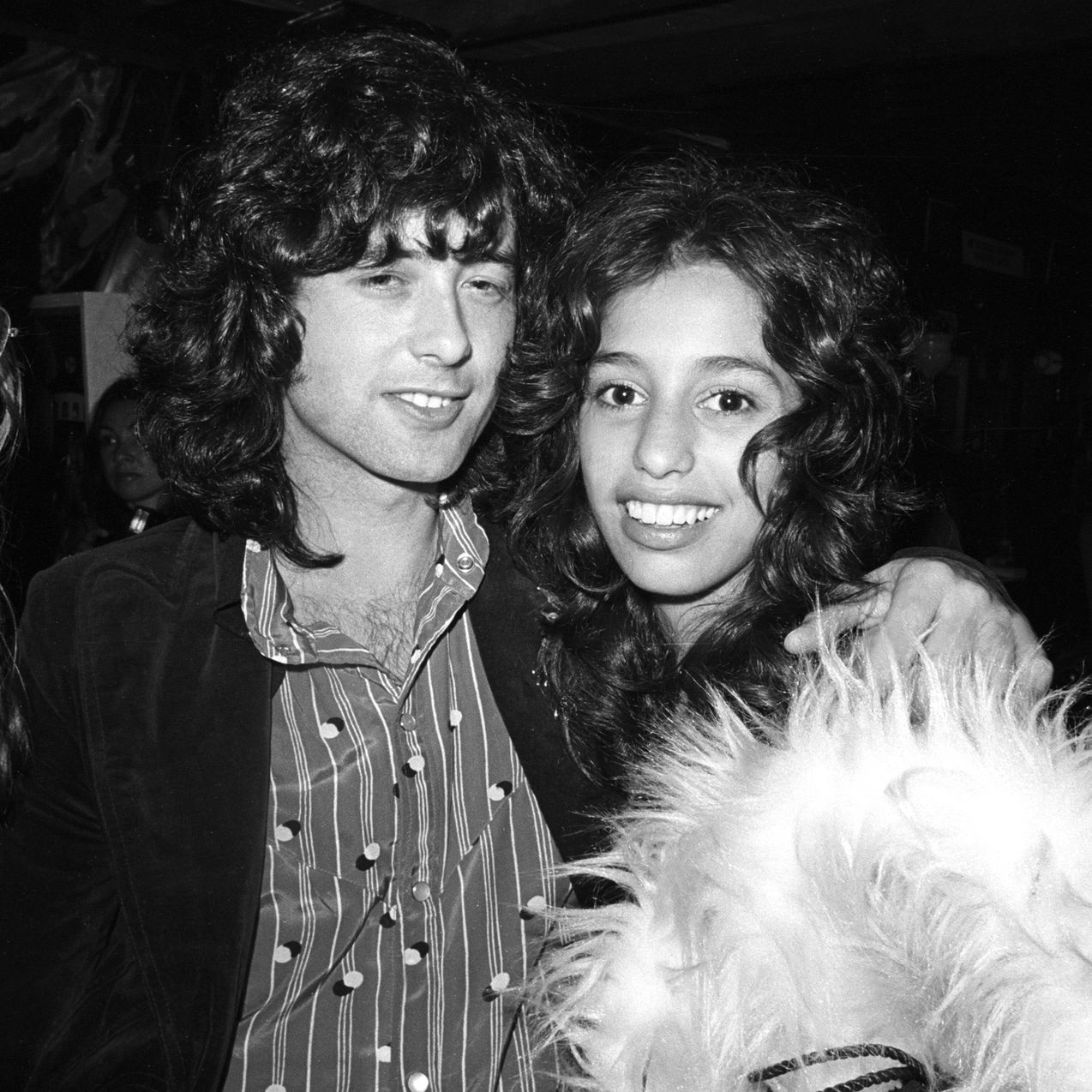
And this is particularly so when it comes to the so-called baby groupies - i.e., underage girls such as Sable Starr [8] and Lori Mattix [9]. The latter was only fourteen when she (allegedly) lost her virginity to David Bowie and not much older when she began her illicit affair with Led Zepplin's Jimmy Page, the couple seen here at Rodney Bingenheimer's English Disco in LA, in 1972:    


Notes
 
[1] I'm certainly not the first to ask this question; see, for example, Thea De Gallier's article 'I wouldn't want this for anybody's daughter': will #MeToo mean the end of the rock 'n' roll groupie?' in The Guardian (15 Mar 2018): click here
      It's hard to imagine in an age when allegations of inappropriate behaviour and sexual misconduct are made at the drop of a hat and issues around consent and male entitlement are widely discussed, that the wild Bacchanalian excesses of the 1960s and '70s would be tolerated now. 
 
[2] In the Gnostic texts, Mary Magdalene's uniquely close relationship with Jesus is often emphasised. In the Gospel of Philip, for example, she is described as a companion to the latter, whom he would openly kiss on the mouth. This has led some scholars to conclude that there was a sexual component to their relationship. 
      The portrayal of Mary as a promiscuous woman or prostitute began in 591 when Pope Gregory I conflated her with Mary of Bethany (Luke 10:39) and the unnamed sinful woman who anointed Jesus's feet in Luke 7:36-50. This view of her has persisted in popular culture, giving rise to the idea of Mary as the original groupie. 
      See: Pamela Des Barres, Rock Bottom: Dark Moments in Music Babylon (1996), who develops the idea that a groupie is to a rock band as Mary Magdalene was to Jesus.
 
[3] This is evidenced by the fact that the February 1969 edition of Rolling Stone was devoted to the topic of groupies and that Time magazine also published an article on the girls of rock, discussing their manners and morals. The documentary film, Groupies (dir. Ron Dorfman and Peter Nevard) was released the following year. 
 
[4] Pamela Des Barres (b. 1948) is an American groupie, writer, musician, and actress. She is best known for her 1987 memoir, I'm with the Band: Confessions of a Groupie, which details her experiences in the Los Angeles rock music scene of the 1960s and 1970s. She was also a member of the experimental all-girl group - composed of groupies - the GTOs (Girls Together Outrageously). 
 
[5] 'Sweet' Connie Hamzy, aka Connie Flowers (1955-2021), was an American groupie who claimed to have had sex with numerous rock musicians and that she was propositioned by Bill Clinton in 1984, when he was the governor of Arkansas. 
 
[6] Cynthia Plaster Caster, born Cynthia Albritton (1947-2022), was an American groupie and visual artist notorious for creating plaster casts of the erect penises belonging to her famous lovers. She began this unusual practice with the assistance of rock stars in 1968, but later included the cocks of filmmakers and other artists, producing 50 phallic works in all. 
 
[7] Barbara Cope (1950-2018) was an American groupie, known in the late 1960s and early 1970s as The Butter Queen, due to her penchant for using butter as lubricant during her sexual encounters with rock stars. Cope claimed to have visited 52 major cities in the United States while following bands, and travelled to 11 different countries with them. She retired from groupie life in 1972, having had sex (again according to her own account) with around 2,000 musicians. 
 
[8] Sable Starr (1957-2009), often described as the queen of the groupie scene in LA during the early 1970s, was also (due to her age) one of the so-called baby groupies; she lost her virginity to a guitarist when she was twelve. In an interview in 1973, she claimed to be acquainted with many famous rock stars, including Rod Stewart, Alice Cooper, David Bowie, Mick Jagger, and Marc Bolan. At 16 she met Johnny Thunders of the New York Dolls and went to live with him in NYC. This did not turn out well. Later, she had a affair with Richard Hell, befriended Nancy Spungen, and participated in the local punk rock scene, but by the early 1980s her groupie days were over.    
 
[9] Lori Mattix (b. 1958), sometimes known as Lori Maddox, or Lori Lightning, is a former American child model and baby groupie of the 1970s. In an interview in 2015, she claimed to have been fucked by Bowie, Jagger, and Jimmy Page whilst she was underage. True or not, she had begun frequenting clubs on Sunset Strip with her friend Sable Starr whe she was 13 and her story has been widely discussed by commentators keen to highlight the sexual exploitation of minors within the music industry.   

 
Further reading (for those who are interested): 

Kathryn Bromwich, 'Groupies revisited: the women with triple-A access to the 60s', The Observer (15 Nov 2015): click here
 
Craig McLean, 'Good time girl: memories of super groupie Pamela Des Barres', The Observer (6 May 2018): click here
 
 
And for a follow up post to this one, on Nancy Spungen - last of the great American groupies - click here.